
Every time a controversial call gets made at the 2026 World Cup, a 3D animation appears on screen. Here’s the full story behind it, and the remarkable camera and AI infrastructure that makes it possible.
You’ve seen it happen. A striker celebrates a goal. A flag goes up. A few seconds later, a ghostly 3D rendering of the players appears on broadcast, frozen in space, a thin line drawn across the screen, the margin confirmed down to centimetres. Decision upheld. Goal disallowed.
It looks almost surgical. And it is.
At the 2026 FIFA World Cup, the technology behind offside decisions has reached a level of precision and visual sophistication that would have seemed like science fiction a decade ago. Here’s what’s actually happening the next time you see that animation.
It Starts With 16 Cameras Per Stadium
Each of the 16 World Cup 2026 stadiums is equipped with 16 dedicated optical tracking cameras, separate from the broadcast cameras you watch the game through. These cameras run at over 50 frames per second and are positioned specifically to track player positions across the entire pitch at all times.
Together, they generate more than 150 million tracking data points per match. That’s not broadcast footage. It’s pure positional data, feeding in real time into an AI processing system that’s watching every player simultaneously.
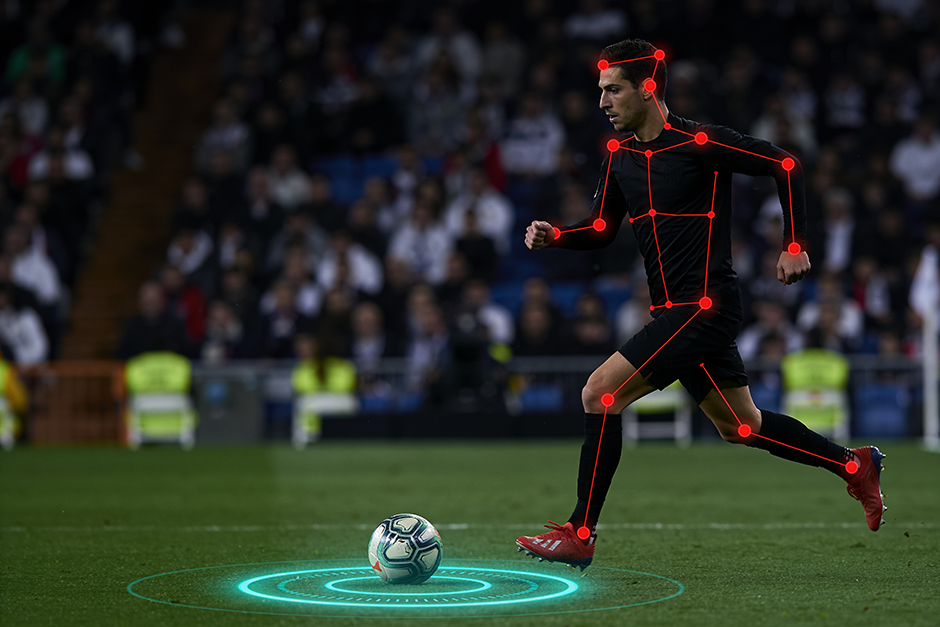
29 Body Points, Per Player, 50 Times a Second
The AI system doesn’t just track where a player is standing. It tracks 29 specific anatomical data points on each player’s body: head, shoulders, elbows, hips, knees, ankles, feet, and more. All 22 players on the pitch. All the time.
To calibrate this further, FIFA digitally scanned every player before the tournament to create an individual 3D avatar, a photorealistic model of each athlete’s body dimensions. When a potential offside situation occurs, the system overlays those scanned avatars onto the positional data, giving you a millimetre-accurate representation of exactly where every limb was at the exact moment the ball was played.
That’s the animation you’re watching on screen. It’s not a graphic designer’s approximation. It’s a real-time 3D reconstruction built from actual tracking data.
The Smart Ball That Knows When It’s Been Kicked
The other half of the system is inside the match ball itself. The official 2026 World Cup ball, the Adidas Trionda, contains a motion sensor chip operating at 500 hertz. That means the ball is transmitting 500 measurements per second about its position, trajectory, and movement in space.
Critically, this sensor tells the system the exact moment of ball contact when a pass is played. This is what makes semi-automated offside accurate: the system captures where every player’s body is at the precise frame the ball leaves the kicker’s foot, not a fraction of a second before or after. At the margins where these decisions get made, a single frame matters.
New for 2026: The Referee’s Point of View
Beyond offside, World Cup 2026 introduced something genuinely new to football at this level: referee body cameras, worn by officials across all 104 matches.
For the first time in World Cup history, fans can watch critical moments from the referee’s literal point of view, in real time and on replay. The cameras use AI-powered image stabilisation developed with Lenovo that reduces motion blur by up to 50%, making the footage clear enough to actually be useful in understanding a decision, rather than just a shaky first-person blur.
From a broadcast production perspective, this is significant. Adding a camera to a moving human being in the middle of a high-intensity athletic event and producing stable, broadcast-quality footage from it is a genuine technical achievement. The integration of this footage into the live broadcast workflow, alongside 16 tracking cameras, smart ball data, VAR replay systems, and standard broadcast coverage, represents a level of multi-source production complexity that’s extraordinary.
What This Means for the Future of Sport on Screen
The system being used at World Cup 2026 is a preview of where sports broadcasting is heading: AI-generated real-time graphics, sensor-embedded equipment, multi-camera positional tracking, and data visualisation that makes complex decisions immediately comprehensible to millions of viewers simultaneously.
The offside animation isn’t just a referee tool. It’s a broadcast storytelling device, one that transforms a disputed technical call into something a casual fan can understand in three seconds. That’s a video production challenge as much as a technology one.
At The Film Lab, we bring broadcast production experience to every project, and technology like this genuinely fascinates us. Watching the infrastructure behind the world’s largest sporting event unfold in real time, from the cameras and data pipelines to the live rendering, is a reminder that the future of video isn’t just better cameras. It’s smarter systems that turn data into images that tell clear, immediate stories in sports, broadcast, and storytelling of every kind.
The Film Lab is a Toronto-based video production company specializing in broadcast production, corporate video, animation, and motion graphics. Get in touch if you’re working on your next production.